AI AML Investigation: Evidence-Completeness Review Bundle
Use an evidence-completeness review bundle to test AI-assisted AML case summaries for source coverage, conflicts, uncertainty, and human sign-off.
THE JOURNAL / COMPLETE ARCHIVE
Explore the published guides by topic, from financial AI tools to economic concepts and automation systems.
Use an evidence-completeness review bundle to test AI-assisted AML case summaries for source coverage, conflicts, uncertainty, and human sign-off.
Use a sovereign AI banking deployment boundary attestation to prove data paths, operator access, and reapproval triggers before production.
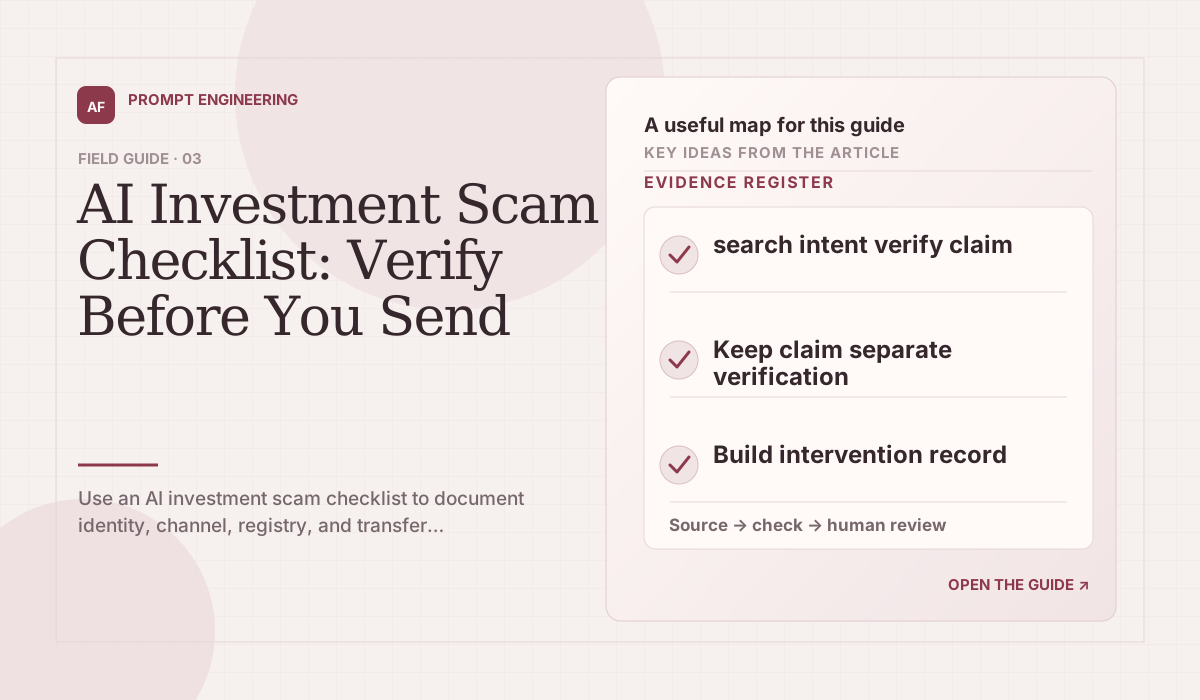
Use an AI investment scam checklist to document identity, channel, registry, and transfer evidence before you send money or information.
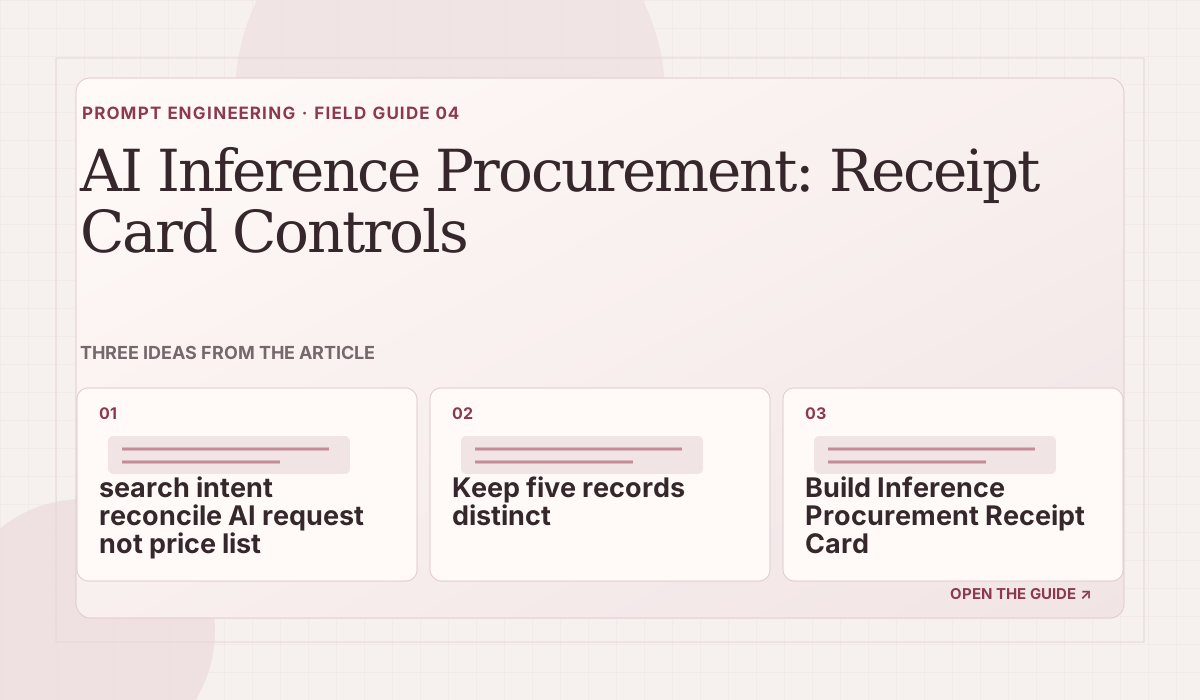
Control AI inference procurement with a receipt card that matches request limits, provider award, metered usage, and invoice evidence.
Use a stage-gated evidence matrix to prepare AI data center insurance placement without confusing construction, commissioning, operations, or value assumptions.
AI insurance quote controls define scope, record evidence and uncertainty, and route regulated questions to a licensed professional before any binding action.
Build a cyber-insurance evidence pack that reconciles declared and observed AI exposure, records gaps, and routes portfolio accumulation questions to humans.
Prepare treasury client meetings with a data-scope evidence pack that tests account access, freshness, source support, uncertainty, and human review.
Use an AI expense-coding close-out card to link source evidence, GL and tax-code checks, human approval, and reversible postings before close.
Control AI-assisted NAV and allocation exceptions with an evidence register, release gates, test harness, and a copyable review prompt.
Test how bank AI adoption may affect lending conditions with a causal scenario notebook, evidence gates, a review prompt, and falsification tests.
Investigate an AI agent card-purchase dispute with an intent evidence file that connects instructions, limits, authorization, order, and fulfillment.
Use an AI economic exposure card to monitor how AI-driven revenue, competition, and supplier dependencies may change a credit portfolio review.
Prepare for a state bank AI exam with a risk-tier evidence pack that maps each use case to documents, owners, review depth, and open gaps.
Use an AI core banking change evidence pack to link requirements, code, tests, and approvers before an AI-assisted release reaches production.
Use an AI estate-review evidence pack to compare plan intent with account titles and beneficiary records—then route every discrepancy to a qualified human.
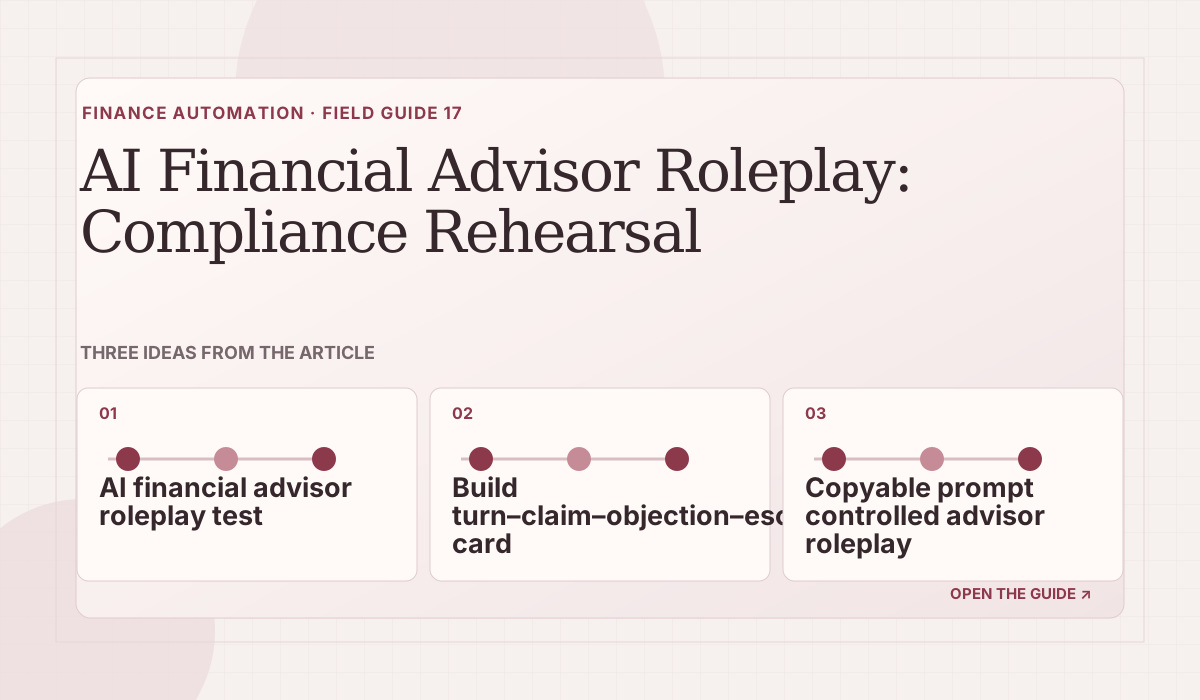
Use an auditable AI advisor roleplay card to test client-conversation claims, objections, escalation paths, and human review before a meeting.
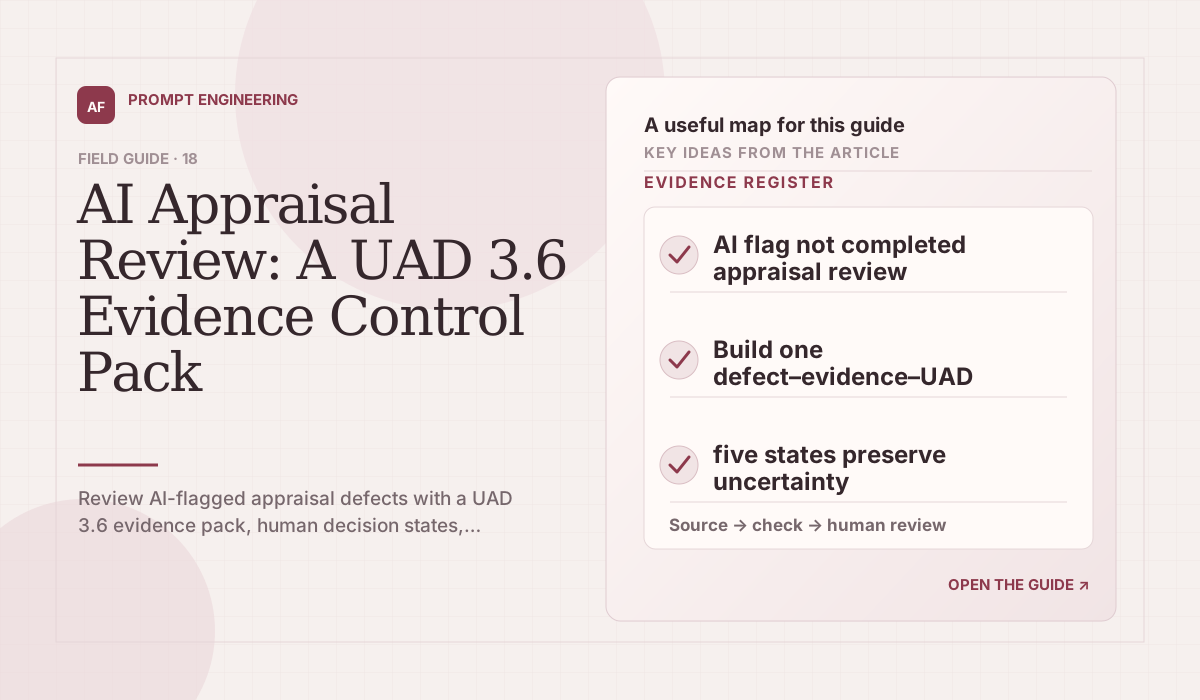
Review AI-flagged appraisal defects with a UAD 3.6 evidence pack, human decision states, red-team tests, and a copyable control prompt.
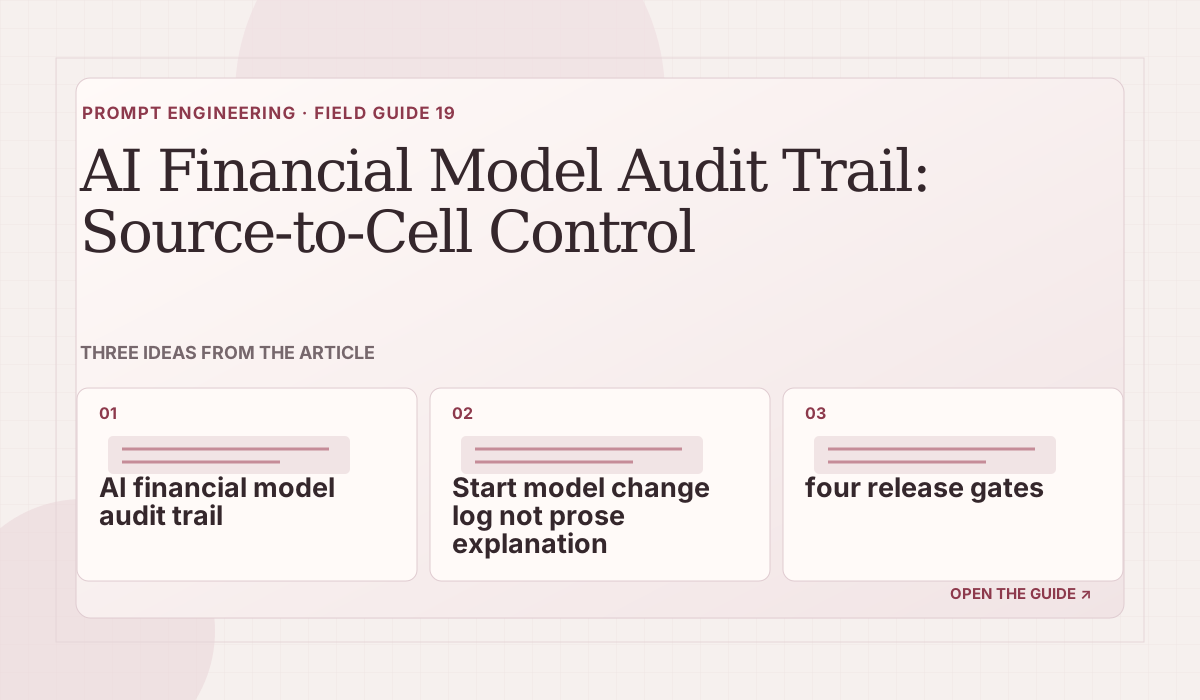
Audit AI-assisted financial models with a source-to-cell control log, formula bridge tests, release gates, and a copyable review prompt.
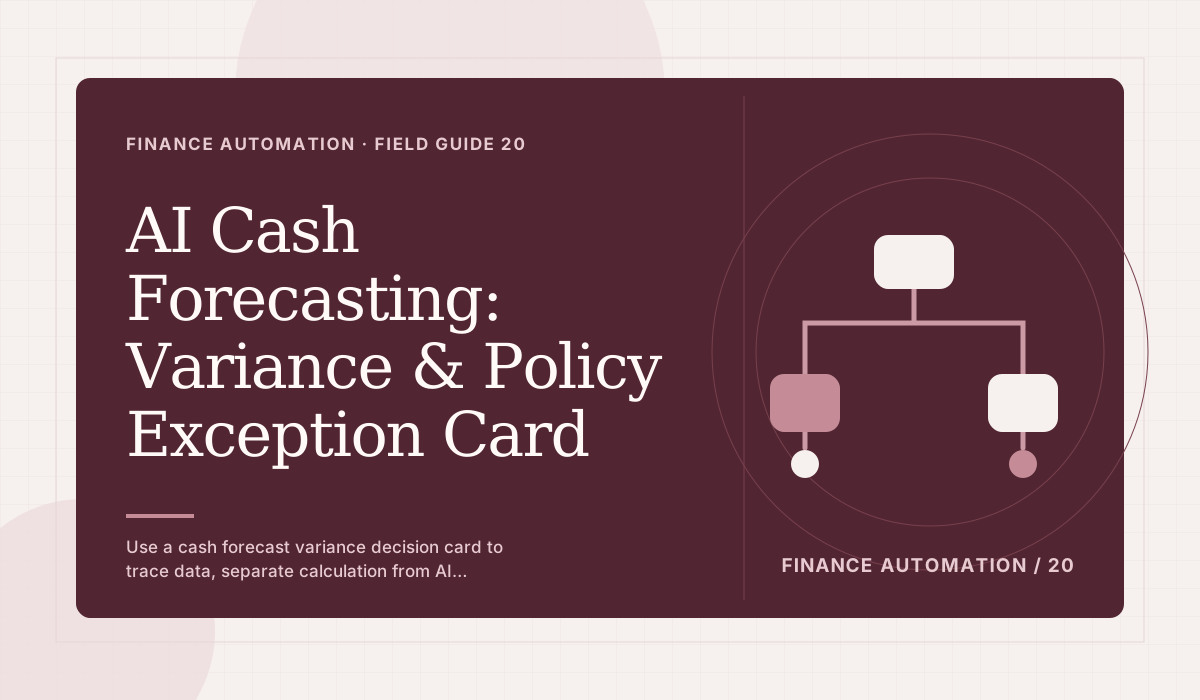
Use a cash forecast variance decision card to trace data, separate calculation from AI explanation, and escalate liquidity policy exceptions.
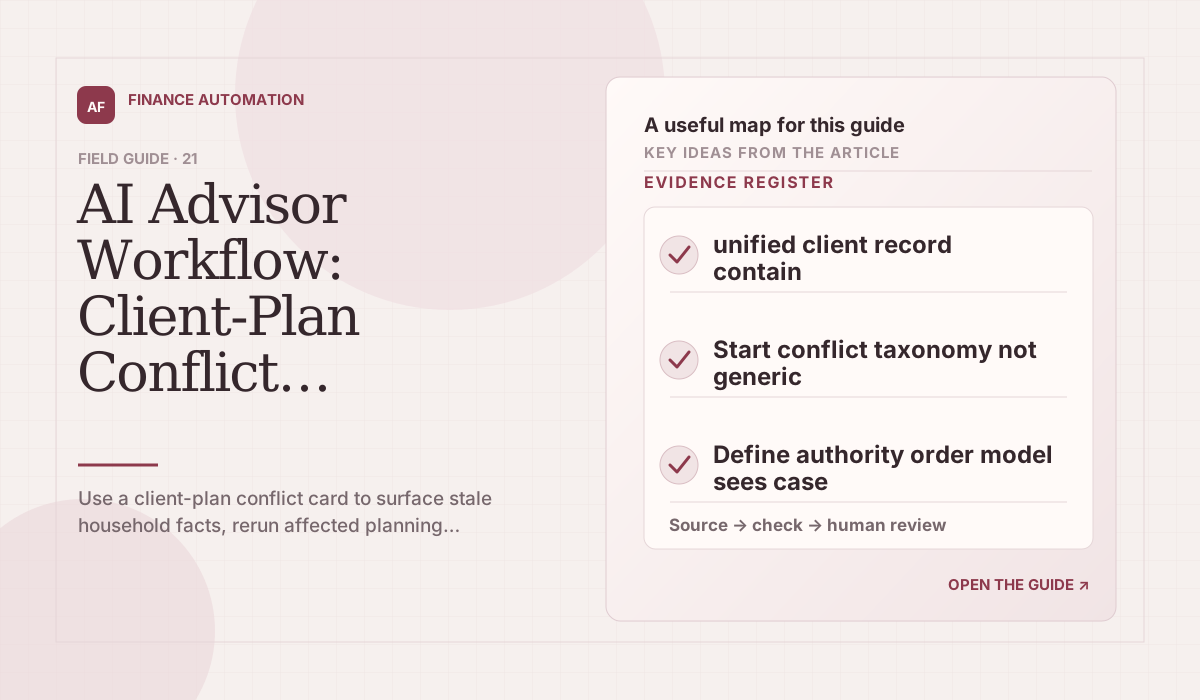
Use a client-plan conflict card to surface stale household facts, rerun affected planning calculations, and route AI-assisted advisor work to human review.
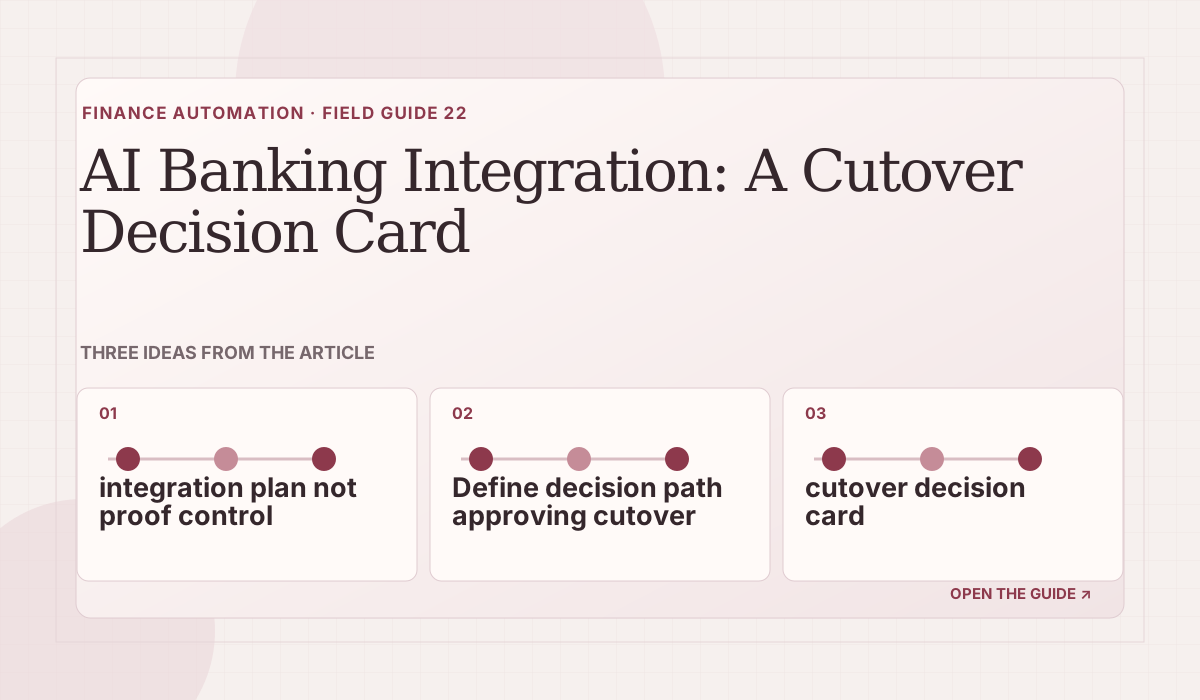
Use a cutover decision card to prove AI banking rules have an owner, source record, ledger effect, rollback plan, and human approval before launch.
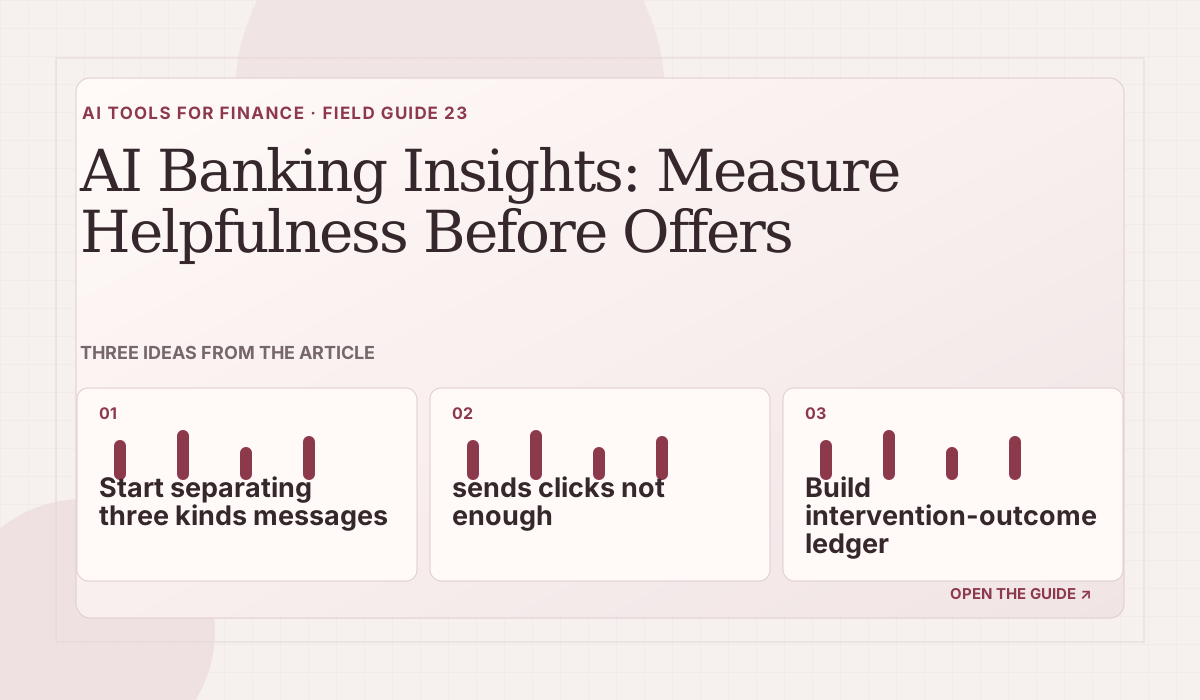
Measure AI banking insights with an intervention-outcome ledger that separates customer help from offers, honors preferences, and stops repeat noise.
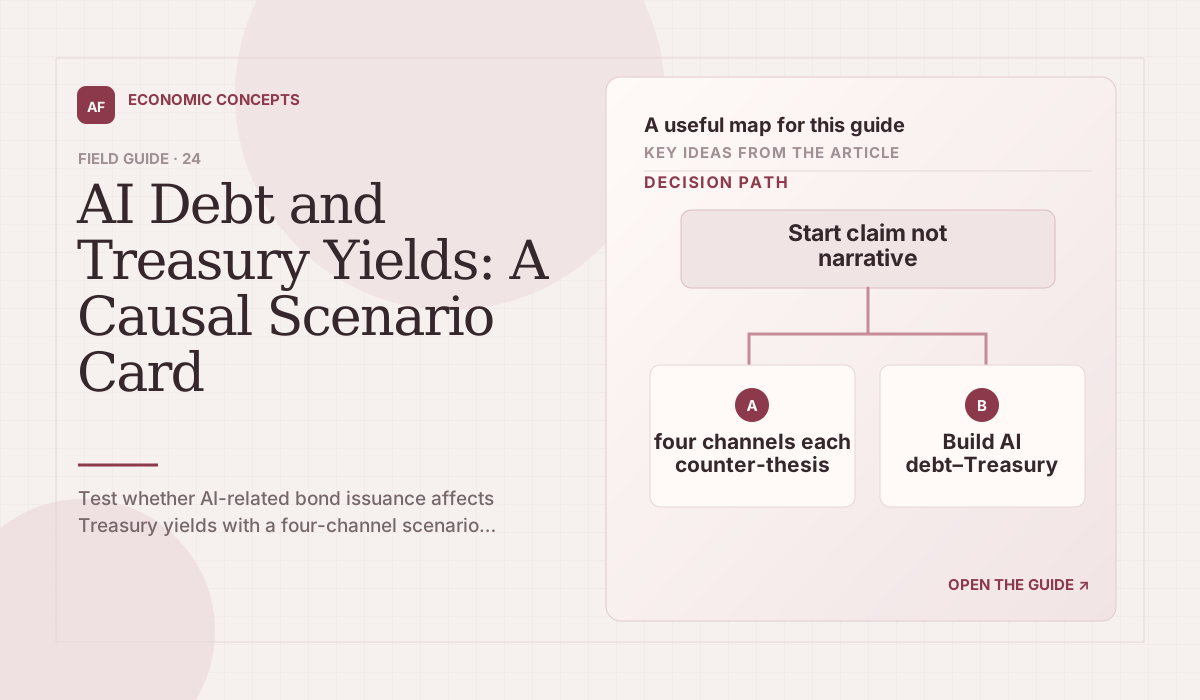
Test whether AI-related bond issuance affects Treasury yields with a four-channel scenario card, evidence log, and falsification triggers.
Use a deterministic AI compliance gate to separate mutual-fund answers from transaction routing, preserve rule evidence, and stop uncertain requests.
Use an AI reconciliation exception handoff card to assign owners, protect accounts, capture evidence, and approve closure without automatic write-backs.
Run a practical AI outage recovery drill: map shared dependencies, move safely to manual operations, retain evidence, and approve staged restoration.
Use a structured evidence register to assess GPU-backed credit: collateral, contracts, escrow releases, operating proof, and recovery assumptions.
Use a pre-trade AI decision card to separate research from execution, expose missing evidence, and require an investor's explicit confirmation.
Stress-test banking agents with policy-grounded scenarios, customer-impact controls, evidence requirements, human escalation, and regression gates.
Calculate the real cost of a financial AI agent by including models, data, review, rework, controls, and the share of outputs finance can actually use.
Turn portfolio data into client-ready commentary without losing the numbers, sources, time period, or boundary between explanation and investment advice.
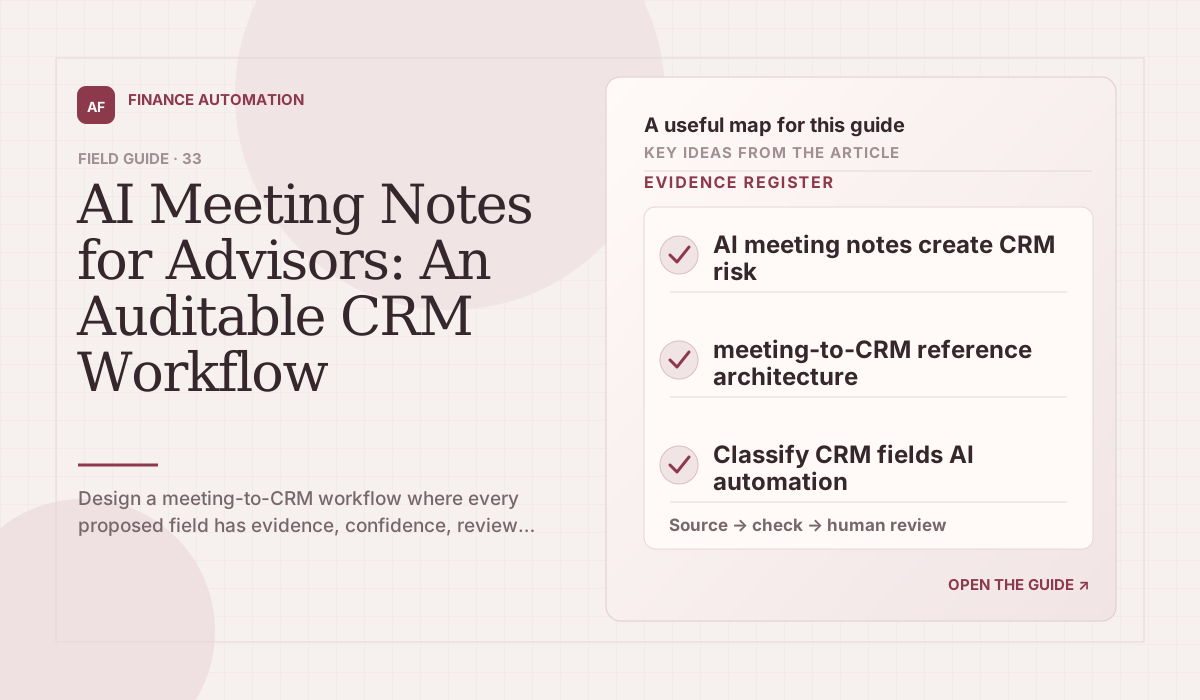
Design a meeting-to-CRM workflow where every proposed field has evidence, confidence, review status, and a human owner before client data changes.
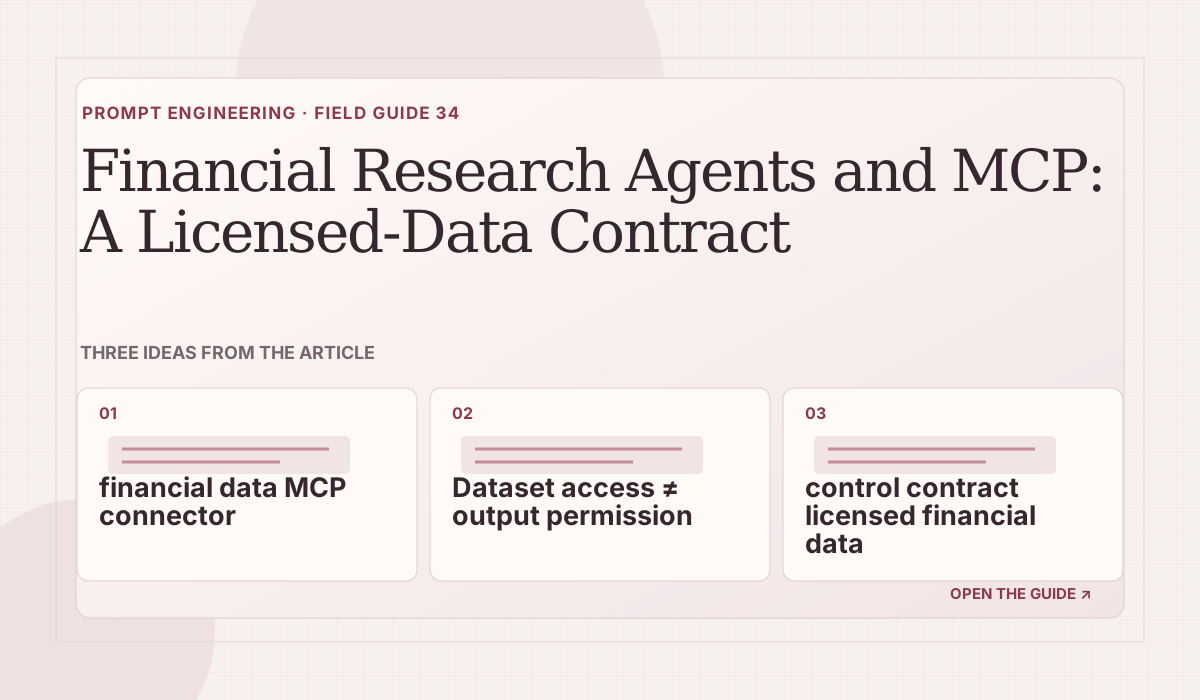
Control which financial datasets an agent may query, what derived output it may produce, what it may retain, and how access is revoked.
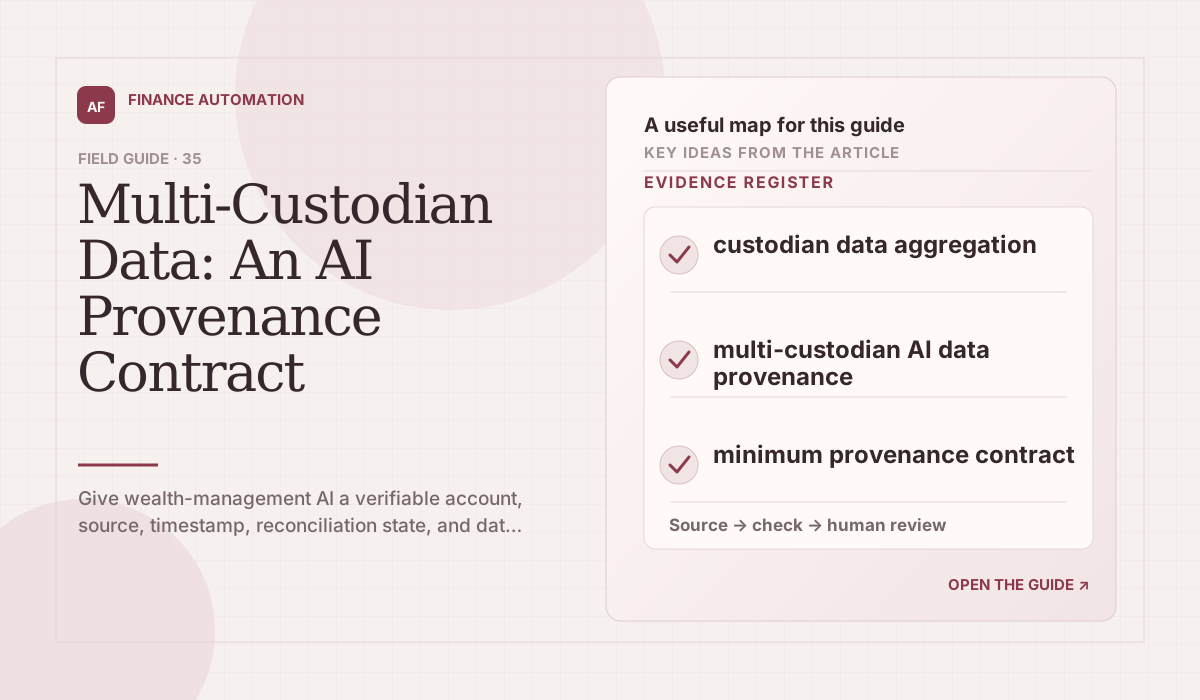
Give wealth-management AI a verifiable account, source, timestamp, reconciliation state, and data lineage before it generates an answer.
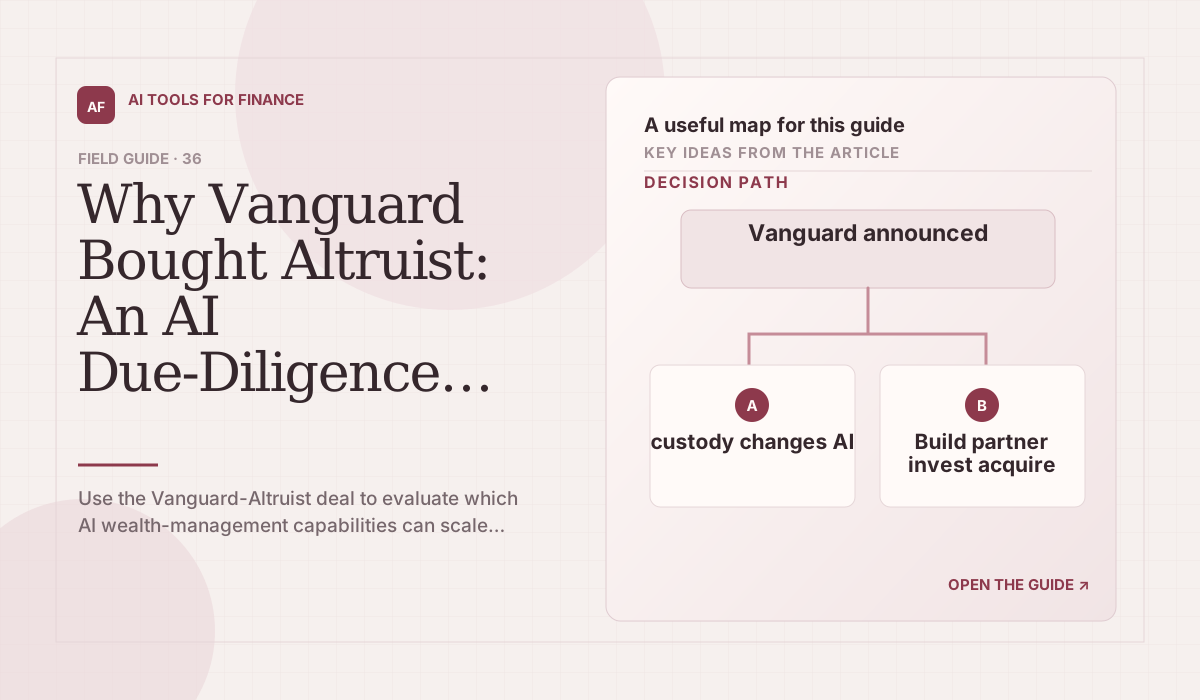
Use the Vanguard-Altruist deal to evaluate which AI wealth-management capabilities can scale across custody, advisor workflows, data, and human oversight.
Learn where agentic AI can accelerate credit-memo research and where evidence, challenge, and human approval must remain mandatory.
Use this control checklist to make AI-assisted financial analysis traceable, reproducible, and safe before it reaches a report, forecast, or decision.
How Amazon Bedrock AgentCore Payments uses x402, MPP, wallets, payment sessions, IAM separation, and infrastructure-enforced spending limits.
What agentic-commerce trust surveys really show, why their numbers differ, and which controls help consumers delegate one purchasing permission at a time.
A practical comparison of PicPay's ChatGPT integration and OpenAI Finances, including permissions, privacy questions, limits, and safer prompts.
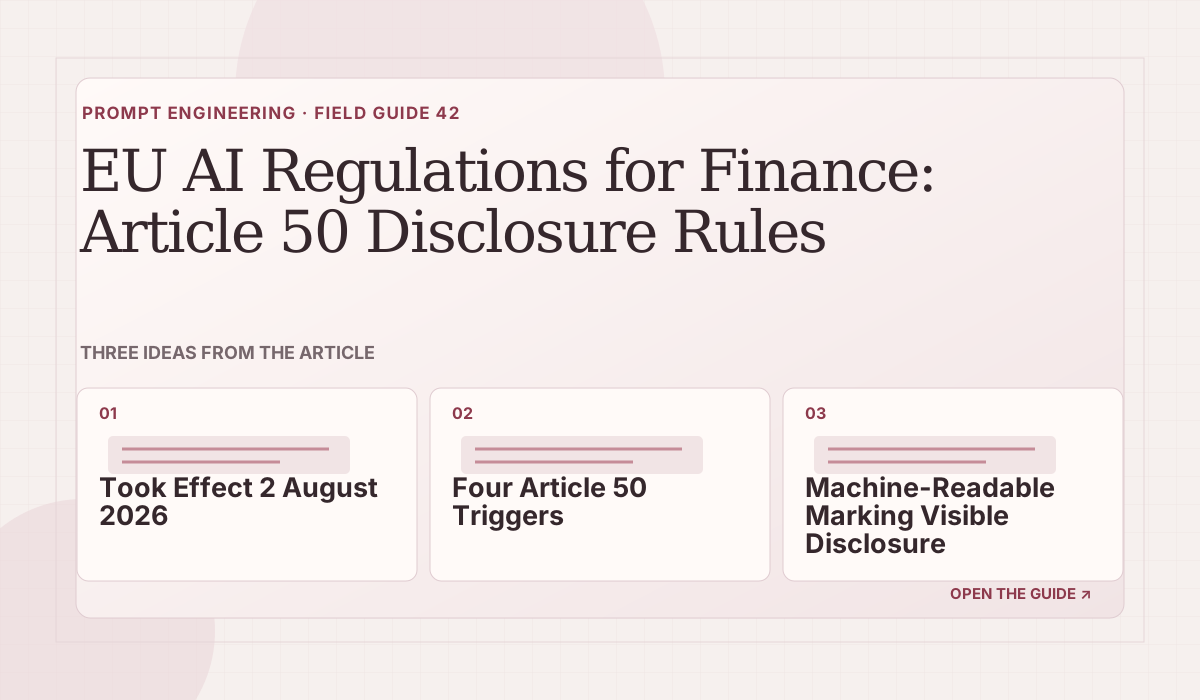
A finance-specific guide to EU AI Act Article 50, covering chatbot notices, machine-readable marking, deepfakes, public-interest text, and human review.
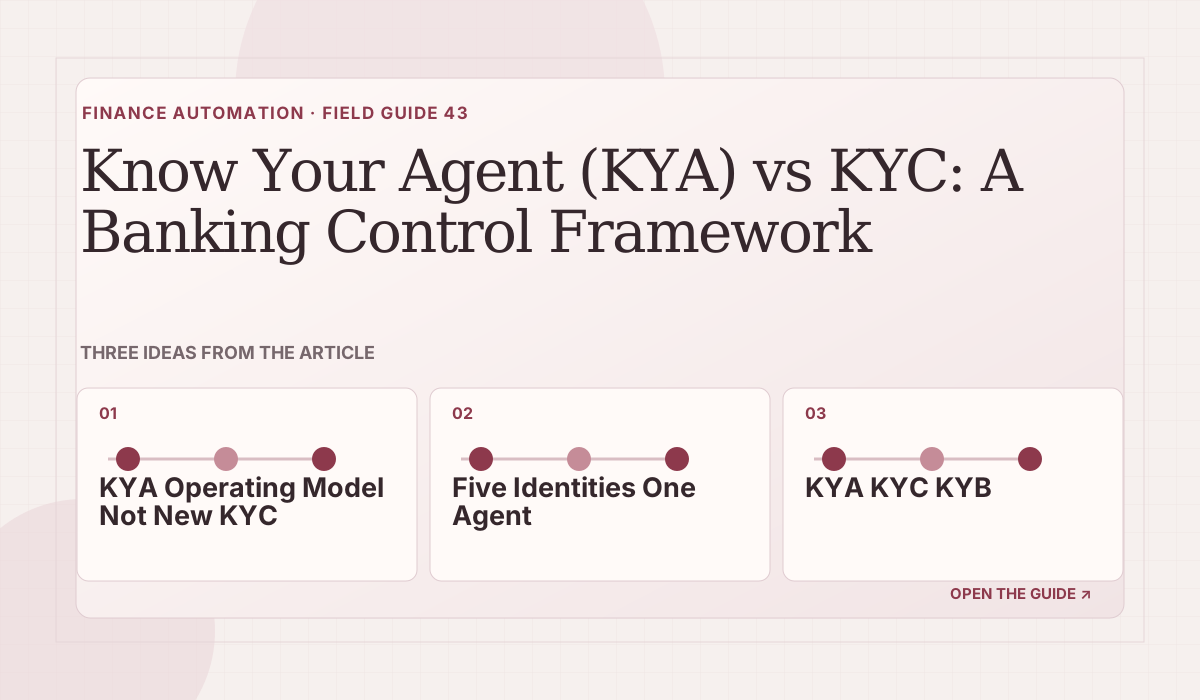
A neutral KYA framework for banks: identify the principal, operator, agent, mandate, credentials, permissions, monitoring, revocation, and evidence.
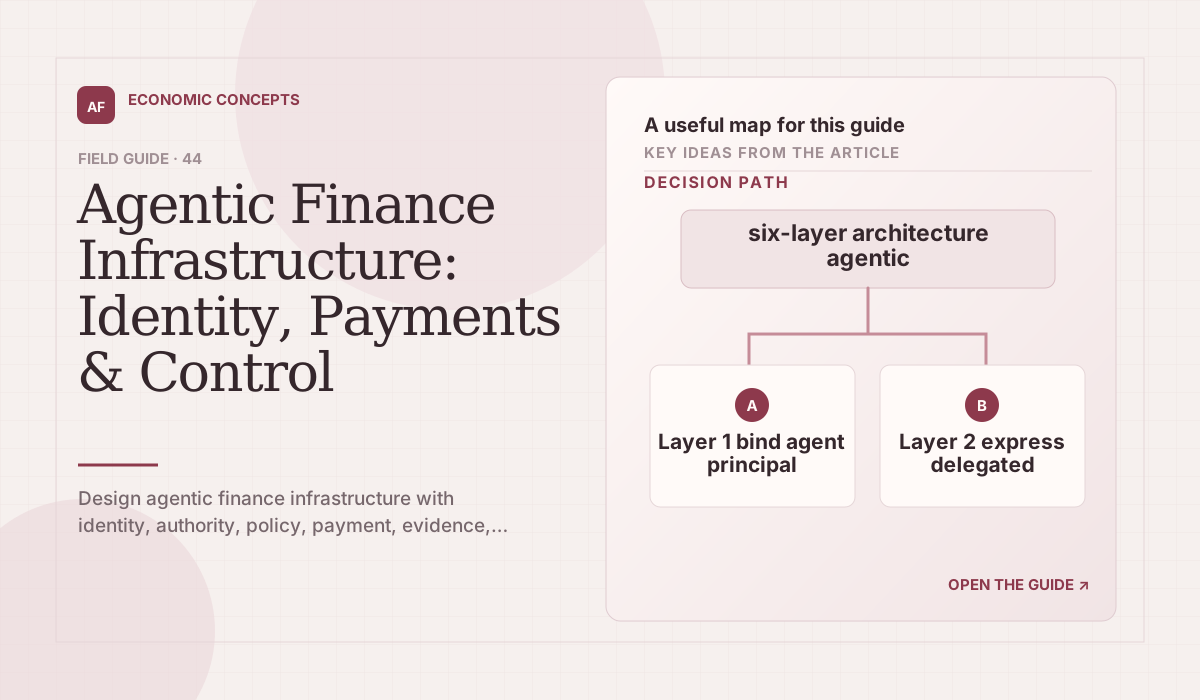
Design agentic finance infrastructure with identity, authority, policy, payment, evidence, and recovery controls plus a reusable authorization contract.
How financial APIs can support AI agents with Model Context Protocol, JSON schemas, authorization controls, and auditable tool use.
Use Perplexity for finance research, document analysis, and Excel workflows with source checks, privacy controls, and copyable analyst prompts.
Learn how to design token economies for AI agents using deterministic supply rules, incentive engineering, and safeguards against economic failure.
Copy controlled AI prompts for variance analysis, forecasting, CFO reporting, and financial-data extraction—with evidence and review checks.
Use NotebookLM for stock research with a cited source pack, copyable analyst prompts, verification tests, and privacy controls for financial data.
Use the 50/30/20 budget rule to divide income among needs, wants, and savings, with an interactive calculator and practical examples.
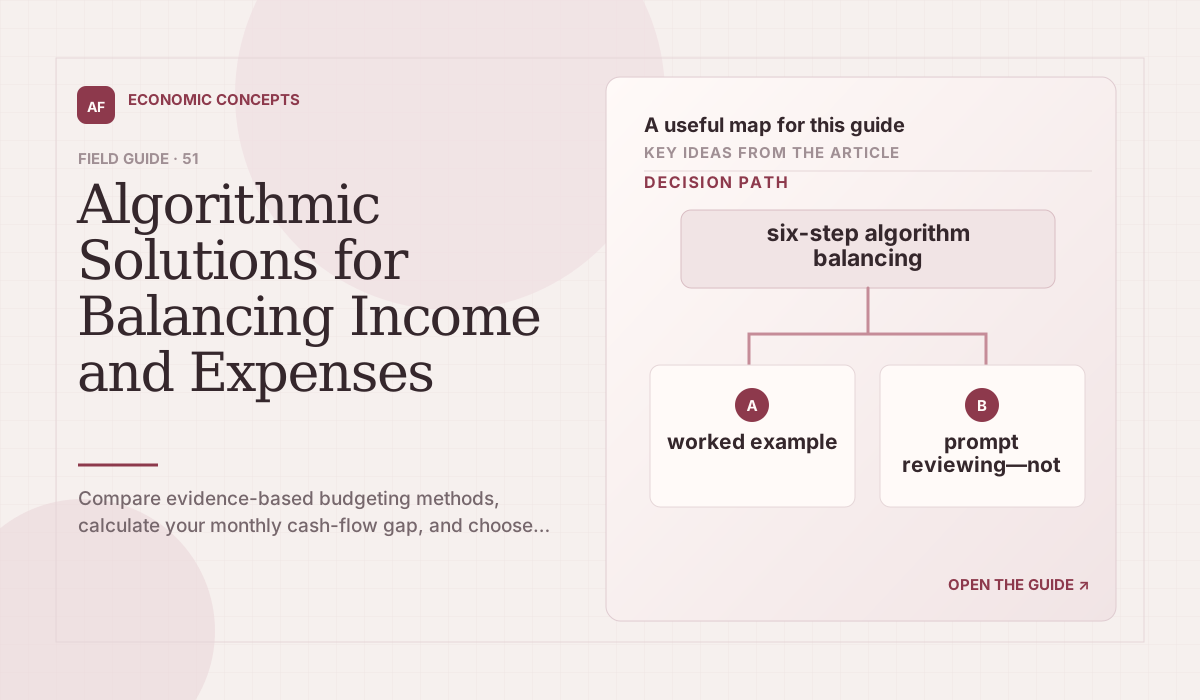
Compare evidence-based budgeting methods, calculate your monthly cash-flow gap, and choose a system for stable, irregular, or high-cost income.
Calculate a 70/20/10 budget from take-home pay, classify expenses correctly, and decide when debt, housing, or irregular income requires a different split.
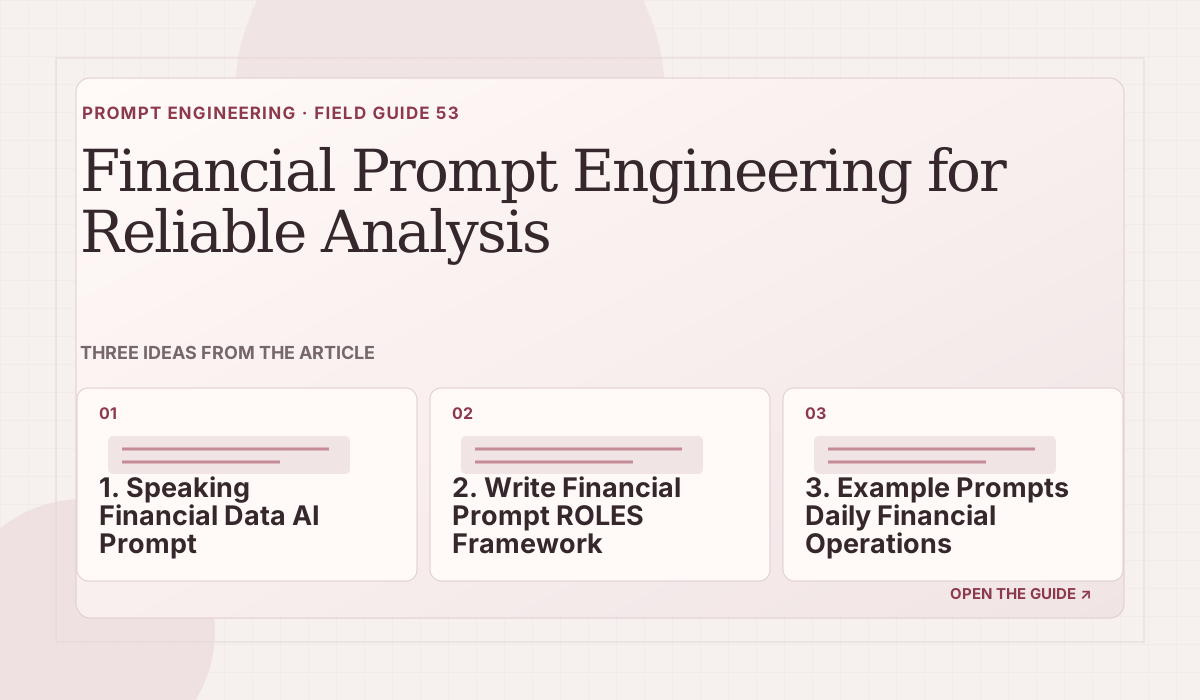
Learn a practical framework for financial prompts, including output constraints, validation, data privacy, and review controls.
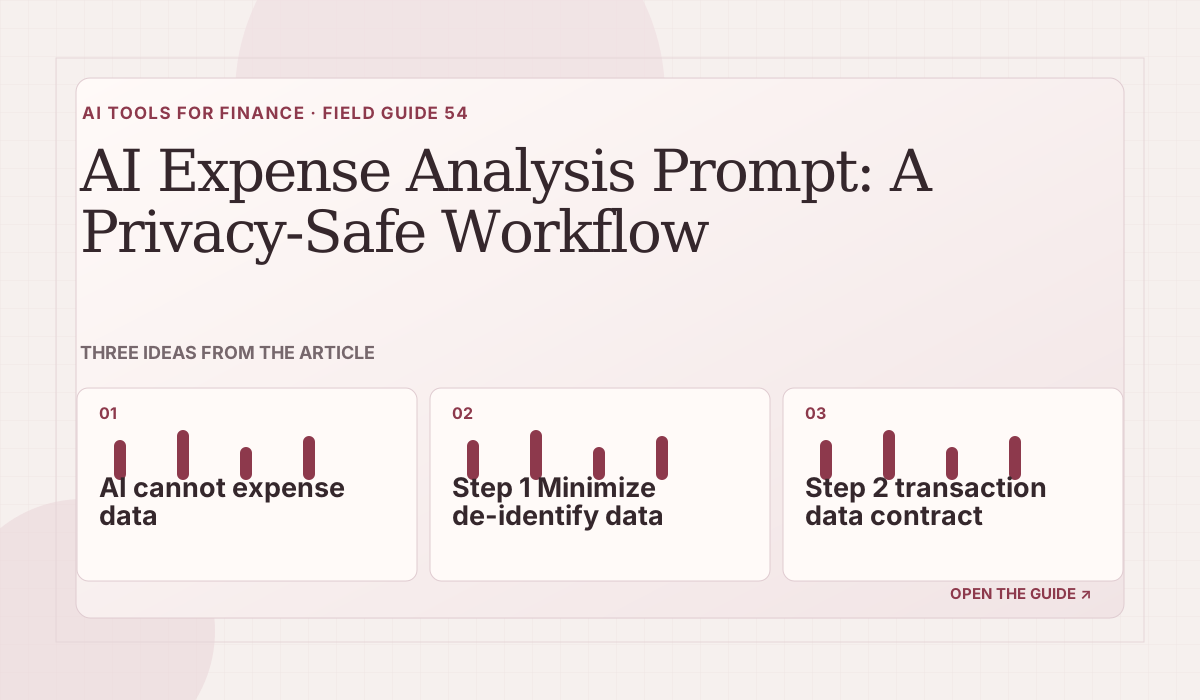
Analyze an anonymized bank statement with AI using a controlled data contract, category review queue, anomaly checks, and privacy safeguards.
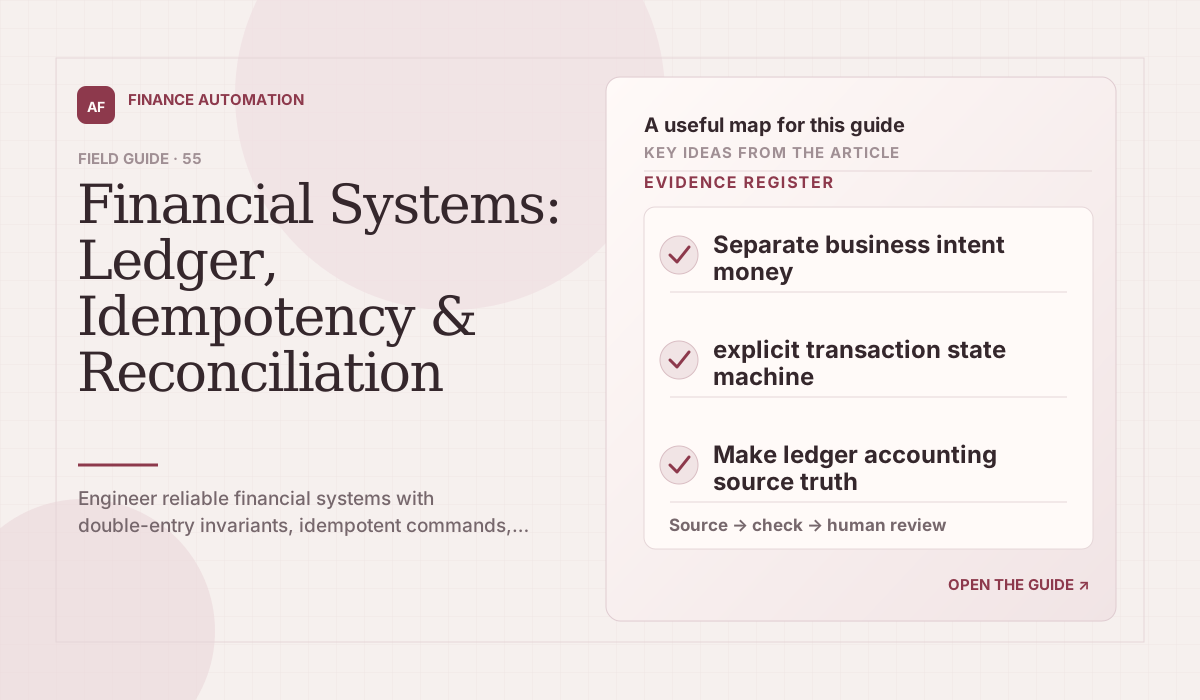
Engineer reliable financial systems with double-entry invariants, idempotent commands, explicit transaction states, reconciliation, and failure-injection tests.
Build auditable AI macro scenarios for productivity, inflation, labor, investment, and stability with an assumption register and falsification triggers.
Test an AI investment strategy for temporal leakage, survivorship bias, costs, and unstable results with a point-in-time data contract and acceptance gate.
Compare AI tools for finance research, spreadsheets, FP&A, and AP using a 30-point scorecard, control checklist, and two-week pilot plan.